
Hair and scalp changes in the menopause transition
Thinning, shedding, texture change, and scalp tenderness in midlife, including patterns that matter for Black women.
- Written by:
- Navelle Editorial Team
- Reviewed by:
- Navelle Clinical Reviewer
- Published:
- August 26, 2026
- Reviewed on:
- August 29, 2026
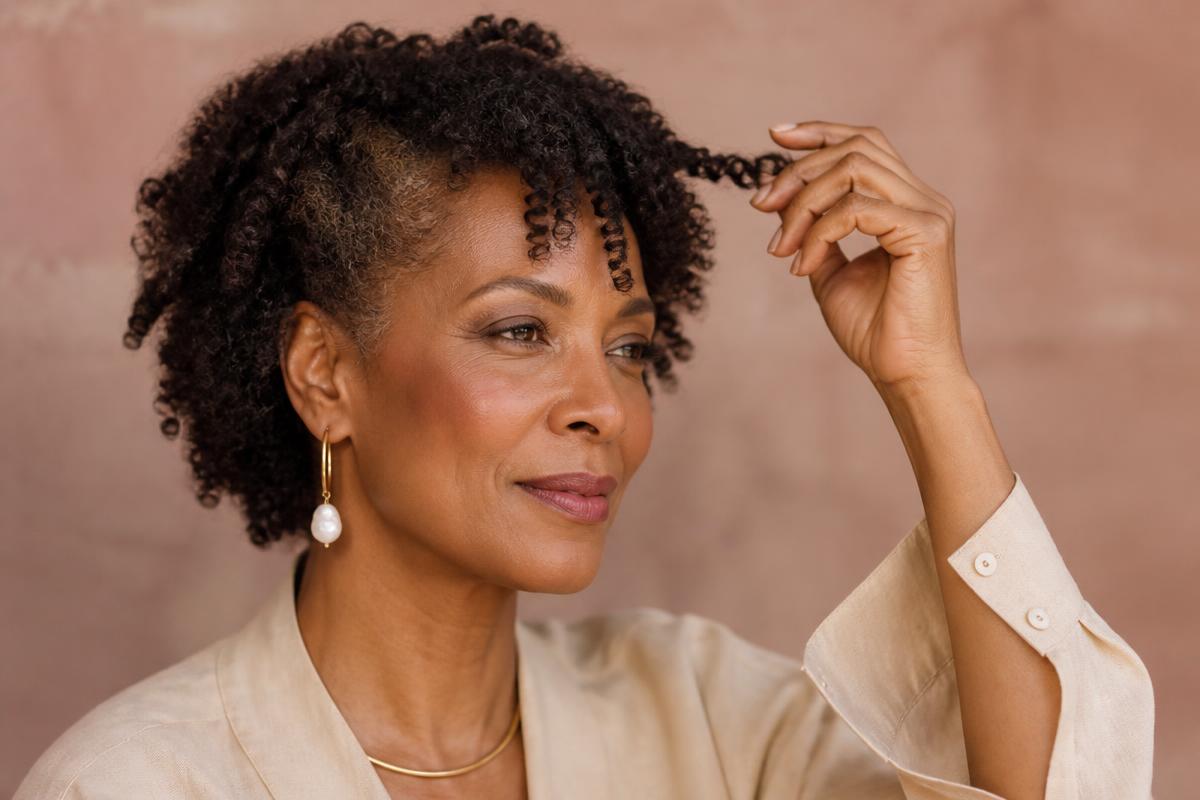
Hair changes are one of the least discussed and most distressing parts of the menopause transition. Shifting hormones can mean thinner strands, a wider part, slower regrowth, more shedding, and a change in texture or curl pattern. Facial hair may increase at the same time scalp hair thins, which can feel like a cruel joke.
What women commonly describe
- A ponytail that feels noticeably thinner
- More hair in the brush or drain than usual
- A scalp that feels tender, tight, or itchy
- Edges that are receding, especially along the temples
- Regrowth that comes in finer or in a different texture
Patterns worth prompt attention
Hair loss with scalp pain, burning, scaling, or shiny smooth patches where follicles look absent can signal scarring hair loss, which is more common in Black women and responds far better to early care. Central centrifugal cicatricial alopecia and traction alopecia both fall into this group. Once follicles are lost, hair does not return, which is why timing matters.
Read the rest with a free account
You are seeing a preview. Creating an account is free, takes a minute, and needs no card or clinical intake.